
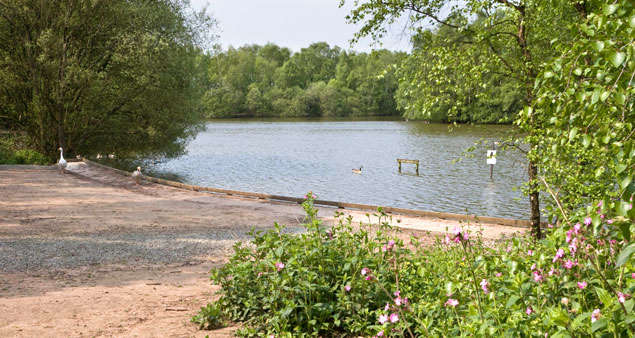
The Council is advising dog owners and other residents visiting Shakerley Mere in Northwich to avoid the water as it may contain toxins hazardous to animal health.
The Council’s Regulatory Services team is reacting to concerns raised about dead birds being found recently at the nature reserve along with presence of blue green algae.
The team also believes that avian botulism may be present in the water at the mere and residents and visitors are being advised of the precautionary measures they should take to protect themselves and their pets.
The risk to human health is considered very low but algal toxins in the water can cause rashes after skin contact and illnesses if swallowed. There is slight risk to animals if they eat a bird that has died of avian botulism.
Residents should avoid entering the water to swim or paddle and prevent their pets from entering the water or drinking from it. Residents and visitors are also urged not to eat the fish at the site or feed the water birds.
Councillor Karen Shore, Deputy Leader of the Council and Cabinet Member for Environment, Highways and Strategic Transport, said: “Blue-green algae naturally occurs in inland waters, and is an important contributor to the aquatic biology of fresh and marine waters.
“However, when there is a shortage of oxygen in stagnant water during warmer weather, the presence of blue-green algae can lead to the production of the bacteria which causes avian botulism. As some birds have died at the mere recently, avian botulism could be present there.
“As a precaution, we are advising dog owners and visitors this summer to avoid the water as it may be hazardous to the health of their pets.”
People should be aware of government advice on avian botulism on the gov.uk website:
http://apha.defra.gov.uk/documents/surveillance/diseases/avian-botulism.pdf
Blue green algae and the botulinum toxin die off in the autumn in cooler conditions.
Avian botulism is a paralytic and often fatal disease for birds, caused by ingestion of toxin produced by the bacterium Clostridium botulinum. Avian botulism outbreaks in wild waterbirds occur relatively frequently in England and Wales. Large numbers of birds may be affected which can result in hundreds of deaths. Outbreaks of avian botulism can last for weeks and may recur. C. botulinum is an anaerobic (oxygen intolerant) bacterium that multiplies in putrefying plant and animal material and is thus often found in lakes in periods of anoxic conditions and poor water quality.
 United Utilities begins upgrade to Hartford's water pipes
 Appeal for information following Northwich burglaries
 Crewe asylum seeker hotel closed following partnership work
 Man jailed for drug dealing in Northwich
 SILK MUSEUM LAUNCHES COMMUNITY-DRIVEN FOOTBALL PHOTOGRAPHY PROJECT
 Local father takes on the Manchester Marathon in thanks to the NHS
 ‘Thumbs up for buses’ say Cheshire East residents
 Council to return to a leader and cabinet model of decision making
 Council celebrates world first green inhaler manufacturer
 Exercise and nutrition programme launches for those on weight loss medications across Cheshire East
 Nearly 20 illegal firearms handed over to police following month-long amnesty campaign
 Aurin Makepeace jailed for murdering Steven Rothwell
 Crime continues to fall in Cheshire for the fourth year in a row
 Appeal for information after man found with unexplained injuries in Macclesfield
 Young Golfer Sets New Record
 Family of man who died following collision pay tribute
 Over 200,000 illegal cigarettes seized in western immigration operation
 Warning after rising attacks on sheep in Cheshire
 Road safety operation launches to keep road users safe
 Cheshire bucks the national trend in tackling shoplifting


Comments
Add a comment