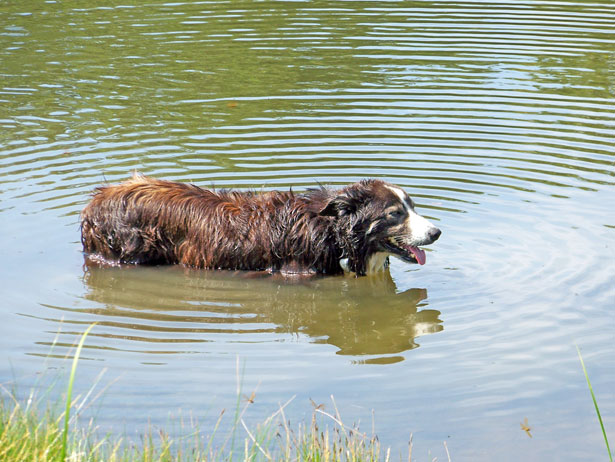
The British Veterinary Association (BVA) is urging pet owners to take extra precautions when walking their dogs in the vicinity of water bodies, after a spike in reports of toxic blue green algae in several locations across the UK this summer.
Blue green algae or cyanobacteria are a group of bacteria that can contain dangerous toxins which can be harmful and even fatal to our pets, livestock and birds if ingested even in small quantities.
The warning comes as at least one case of a dog death linked to blue green algae exposure was reported earlier this summer, in a British Bulldog in the Lake District.
Blue green algae blooms may appear as green or greenish-brown scum on the surface of water. Dogs can swallow it by drinking water from an affected lake, river or pond or while licking their fur after going for a swim.
Symptoms of exposure can appear within a few minutes or hours, depending on the type of toxin ingested, and commonly include: vomiting, diarrhoea, drooling, disorientation, trouble breathing, seizures and blood in faeces. If left untreated, it can cause liver damage and ultimately be rapidly fatal.
British Veterinary Association President Daniella Dos Santos said:
“We are hearing of increasing numbers of blue green algae sightings across the UK during this warm summer. We know that some dogs enjoy nothing better than a paddle in a cool lake while on a walk, but we’d urge pet owners to keep their dog on a lead during walks near water confirmed to have toxic algal blooms. While not all blue green algae are poisonous, it is impossible to tell the difference visually, so it is better to be safe than sorry.
“There is currently no known antidote for the toxins, so prompt veterinary treatment is the only way to tackle their effects and ensure a good chance of recovery for your pet. If you suspect your dog has been exposed to blue green algae, seek emergency veterinary treatment as soon as possible."
BVA has issued the following advice for pet owners:
- Look out for any warning signs put up by the Environment Agency or local councils near water bodies.
- Keep pets on a lead and by your side around water bodies known or suspected to have blue-green algal bloom – don’t let them swim in it or drink from it.
- If your dog has been swimming outside, wash it thoroughly with clean water afterwards.
- Seek emergency veterinary treatment in case you’re concerned it may have ingested toxic algae.
 Man sentenced after assaulting woman in Knutsford
 Cheshire Foundation sponsors 1,000 ‘Leo the Lion’ children’s books for Macclesfield Hospital
 Consultation on Knutsford Town Council's Budget
 Police promoting road safety for all drivers and ensuring fitness to drive
 Call for stories of women and girls across Cheshire
 Cheshire officers working to keep our town centres even safer
 Life ban for woman whose dead dog was found in a rug in back garden
 Hartford man jailed following successful stop and search in Northwich
 Man jailed for historic sexual offences in Macclesfield
 Mayors’ cadet Jenson Webb embarks on a life changing Nepal expedition
 Man charged in relation to fatal collision involving off-duty police officer
 Ofsted highlights accelerating pace of improvement in Cheshire East children’s services
 Man sentenced following serious collision in Nantwich
 Two men sentenced for county lines drug dealing
 £50,000 fund opens to support safer communities across Cheshire
 Have your say on proposed changes to Council Tax Support in Cheshire East
 Three people jailed for more than 18 years following false imprisonment in Winsford
 New community mental health service launches across Cheshire East
 Highways teams are ready to keep Cheshire East moving this winter