

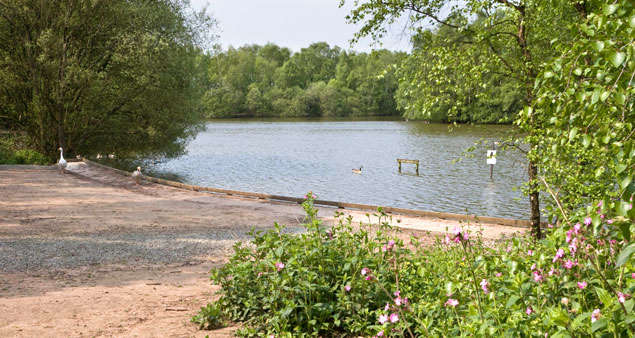
The Council is advising dog owners and other residents visiting Shakerley Mere in Northwich to avoid the water as it may contain toxins hazardous to animal health.
The Council’s Regulatory Services team is reacting to concerns raised about dead birds being found recently at the nature reserve along with presence of blue green algae.
The team also believes that avian botulism may be present in the water at the mere and residents and visitors are being advised of the precautionary measures they should take to protect themselves and their pets.
The risk to human health is considered very low but algal toxins in the water can cause rashes after skin contact and illnesses if swallowed. There is slight risk to animals if they eat a bird that has died of avian botulism.
Residents should avoid entering the water to swim or paddle and prevent their pets from entering the water or drinking from it. Residents and visitors are also urged not to eat the fish at the site or feed the water birds.
Councillor Karen Shore, Deputy Leader of the Council and Cabinet Member for Environment, Highways and Strategic Transport, said: “Blue-green algae naturally occurs in inland waters, and is an important contributor to the aquatic biology of fresh and marine waters.
“However, when there is a shortage of oxygen in stagnant water during warmer weather, the presence of blue-green algae can lead to the production of the bacteria which causes avian botulism. As some birds have died at the mere recently, avian botulism could be present there.
“As a precaution, we are advising dog owners and visitors this summer to avoid the water as it may be hazardous to the health of their pets.”
People should be aware of government advice on avian botulism on the gov.uk website:
http://apha.defra.gov.uk/documents/surveillance/diseases/avian-botulism.pdf
Blue green algae and the botulinum toxin die off in the autumn in cooler conditions.
Avian botulism is a paralytic and often fatal disease for birds, caused by ingestion of toxin produced by the bacterium Clostridium botulinum. Avian botulism outbreaks in wild waterbirds occur relatively frequently in England and Wales. Large numbers of birds may be affected which can result in hundreds of deaths. Outbreaks of avian botulism can last for weeks and may recur. C. botulinum is an anaerobic (oxygen intolerant) bacterium that multiplies in putrefying plant and animal material and is thus often found in lakes in periods of anoxic conditions and poor water quality.
 Future Leighton Hospital construction partner raises over £6,600 for Mid Cheshire Hospitals Charity
 Congleton Town Council Provides Free Bus Travel to Power the Green Fayre
 Man jailed for assaulting a man in Knutsford
 Man jailed for rape and attempted rape in Congleton
 Two-way traffic to return to Winsford Station Bridge with weight restriction in place
 TRACTOR RUN - ADLINGTON TO TWEMLOW - TO OPPOSE THE PEAK CLUSTER PIPELINE
 Crewe man sentenced for online child sexual offences
 Supporters join Cheshire disability charity to celebrate grand opening of Wingate Holidays
 New Congleton CID team goes from strength to strength
 Children and families in Cheshire to benefit from new Child Focused Courts approach
 Appeal for information following serious collision in Crewe
 How is smoking impacting your health?
 Work to begin on phase 2 of Manchester Road Active Travel scheme
 Eleven Years of Christmas for the Community – Buxton’s Community Helping Community
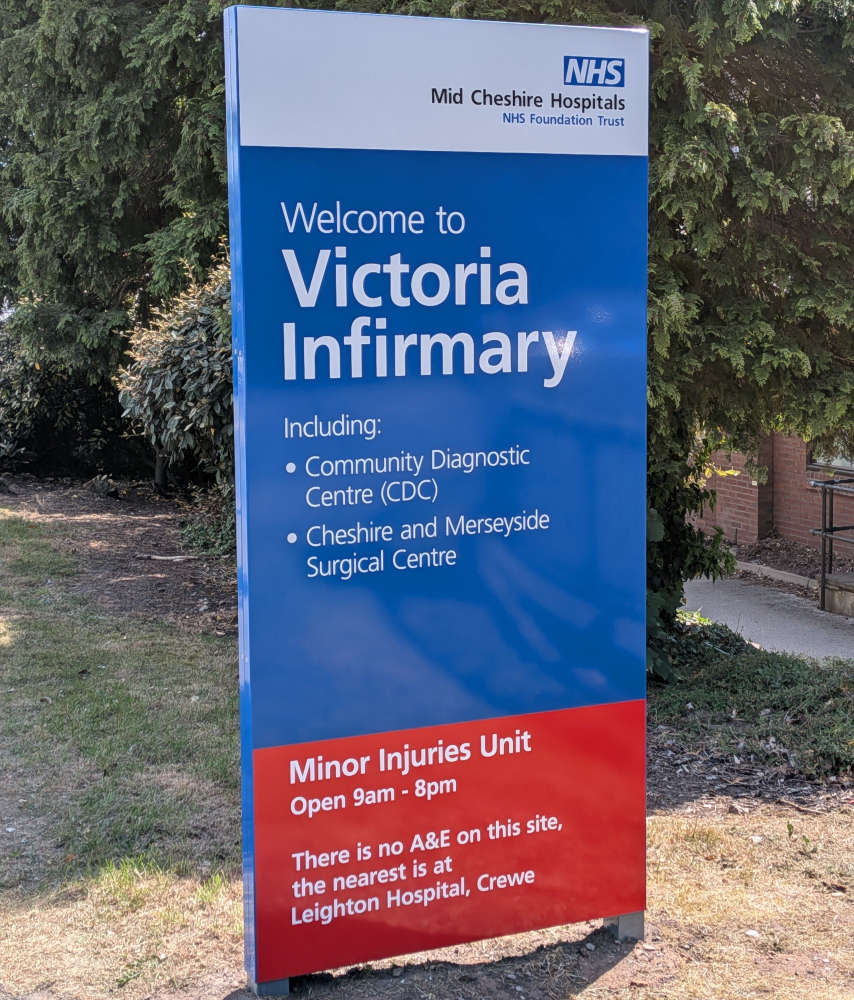 Victoria Infirmary Outpatients rated Good by the Care Quality Commission
 Two Years Without Sunday Trains - Congleton Campaigners Demand Action
 Residents invited to have their say on plans to clamp down on anti-social drivers
 Cheshire East Council highlights business success at award-winning Need Golf visit

Comments
Add a comment